← All selected workEnterprise Systems
Crowley Maritime
Unifying freight quoting across a fragmented supply chain
- Role
- Staff Design Consultant
- Timeline
- Nagarro client engagement
- Engagement
- Advisory · delivered through Nagarro
At a glance
- User
- International shippers and Crowley quote operators
- Problem
- A ~20-field spreadsheet-style quote split across trucking, ports, and brokers
- My mandate
- Experience architecture for the wizard and design-system documentation with product partners (via Nagarro)
- Hard decision
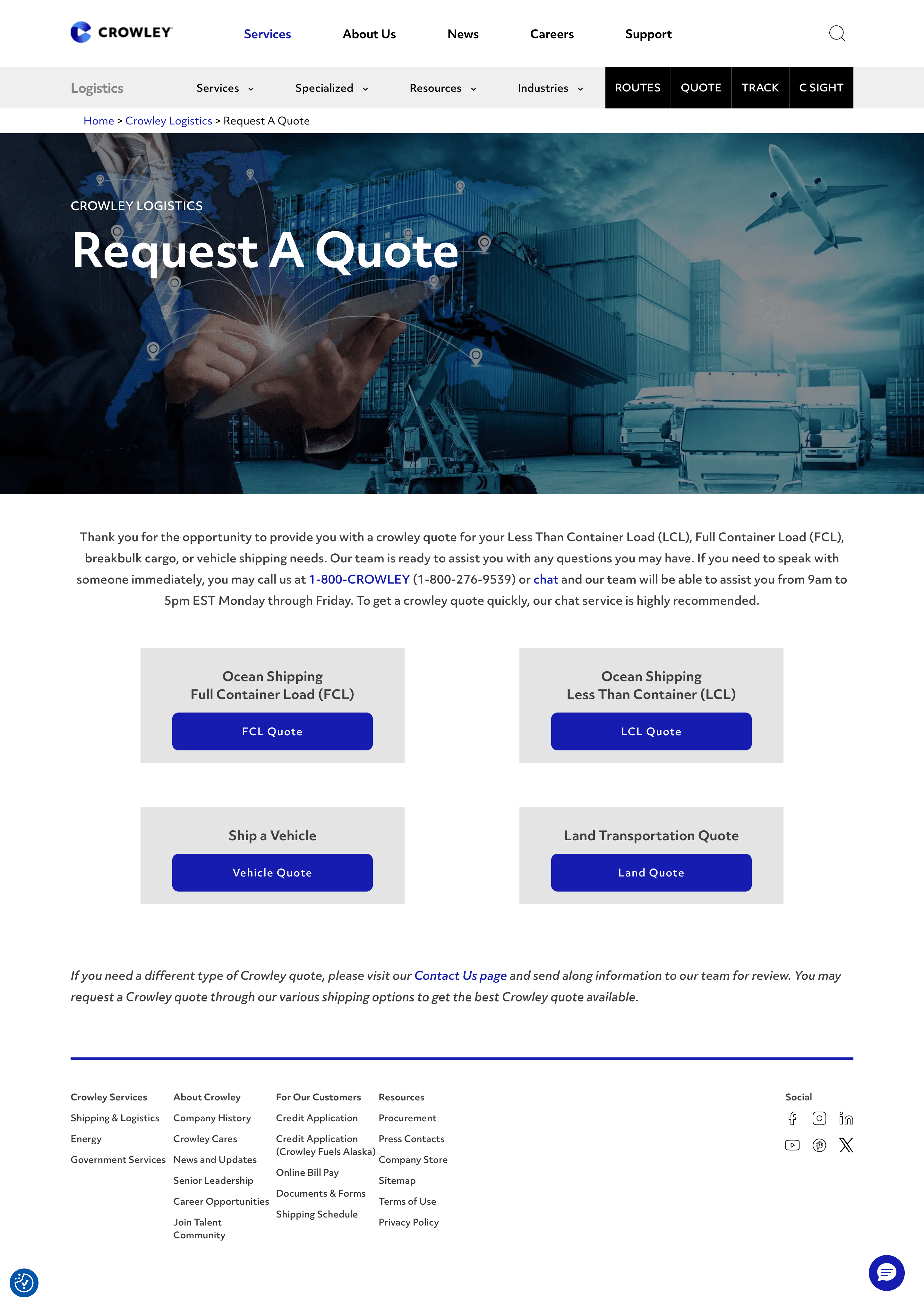
- Three-step progressive disclosure over a reskin or spreadsheet-adjacent layout
- Result
- Portfolio documents route → cargo → contact design; longevity and project year unpublished
People affected
Primary users were international shippers and Crowley quote operators. Stakeholders included product managers owning prioritisation, engineering owning the rate engine and APIs, and compliance owning customs and regulatory data requirements.
The apparent problem
The team believed the quote experience was “too complex” and needed a cleaner UI on top of the same field set.
The problem underneath
Quoting was not one form — it was a fragmented operating model. Route, cargo, schedule, and customs data lived in different handoffs. Rate-engine fields and customs requirements could not be dropped; they could only be sequenced so shippers answered the right question at the right moment.
My mandate
- I owned
- Experience architecture for the quote wizard (route → cargo → contact sequencing), progressive disclosure of cargo and contact steps, and design-system documentation contributed with the Crowley product team during the Nagarro engagement.
- Others owned
- Product owned prioritisation and release sequencing. Engineering defined rate-engine and API field constraints. Compliance reviewed customs and regulatory data collection. Crowley owned production implementation and what remained after the engagement.
- Final decisions
- Product made final scope calls; compliance could block a step that omitted required regulatory fields.
- Team
- Staff design consultant embedded with Crowley product, engineering, and compliance stakeholders — engagement delivered through Nagarro. Advisory, not Crowley headcount ownership.
- Authority
- Advisory authority over experience architecture and system patterns during the engagement — not ownership of Crowley’s design organisation or ongoing product backlog.
- Delivery constraints
- Had to design against a live rate engine, existing cargo data structures, and customs rules that could not be redesigned away.
What I would change now
I would document the fragmented before-state as an explicit operator journey map earlier in the engagement, and I would instrument step abandonment by field type so product could see which customs or dimension prompts still create friction in production.